Navigated TMS (nTMS): brain stimulation with GPS-level precision.
Non-invasive, medication-free brain stimulation using the Nexstim NBS system — guided by your own MRI and directed at every step by a board-certified neurologist.
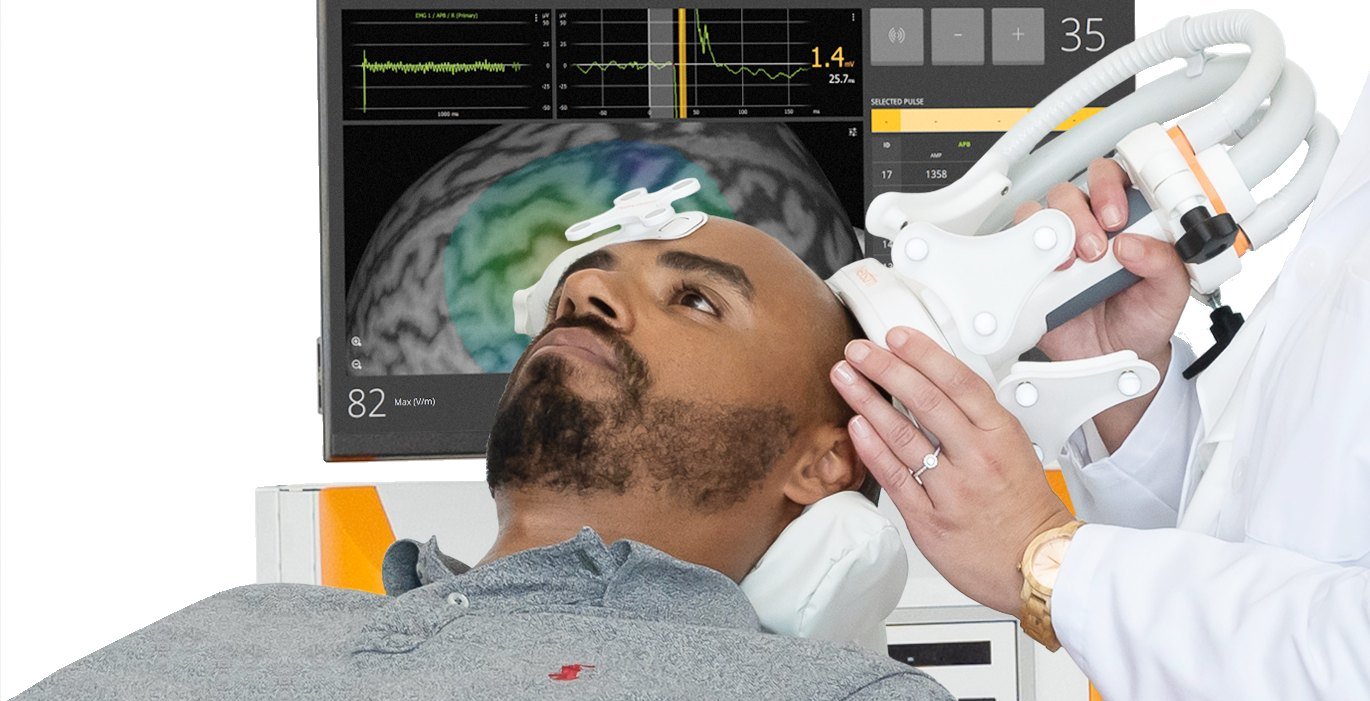
What is navigated TMS?
Navigated TMS (nTMS) is transcranial magnetic stimulation (TMS) delivered with MRI-guided neuronavigation — gentle magnetic pulses aimed at a precise target in your brain. It's non-invasive: nothing enters the body, and no anesthesia is needed.
The "n" is what sets Meridian Neuro apart. The Nexstim NBS system maps stimulation onto your brain anatomy in real time, delivering each pulse with millimeter-level precision. Standard TMS relies on external scalp measurements; nTMS shows the clinician exactly where the stimulation is landing.
The protocol we use is intermittent theta burst stimulation (iTBS), a modern, time-efficient form of stimulation delivered through the nTMS platform.
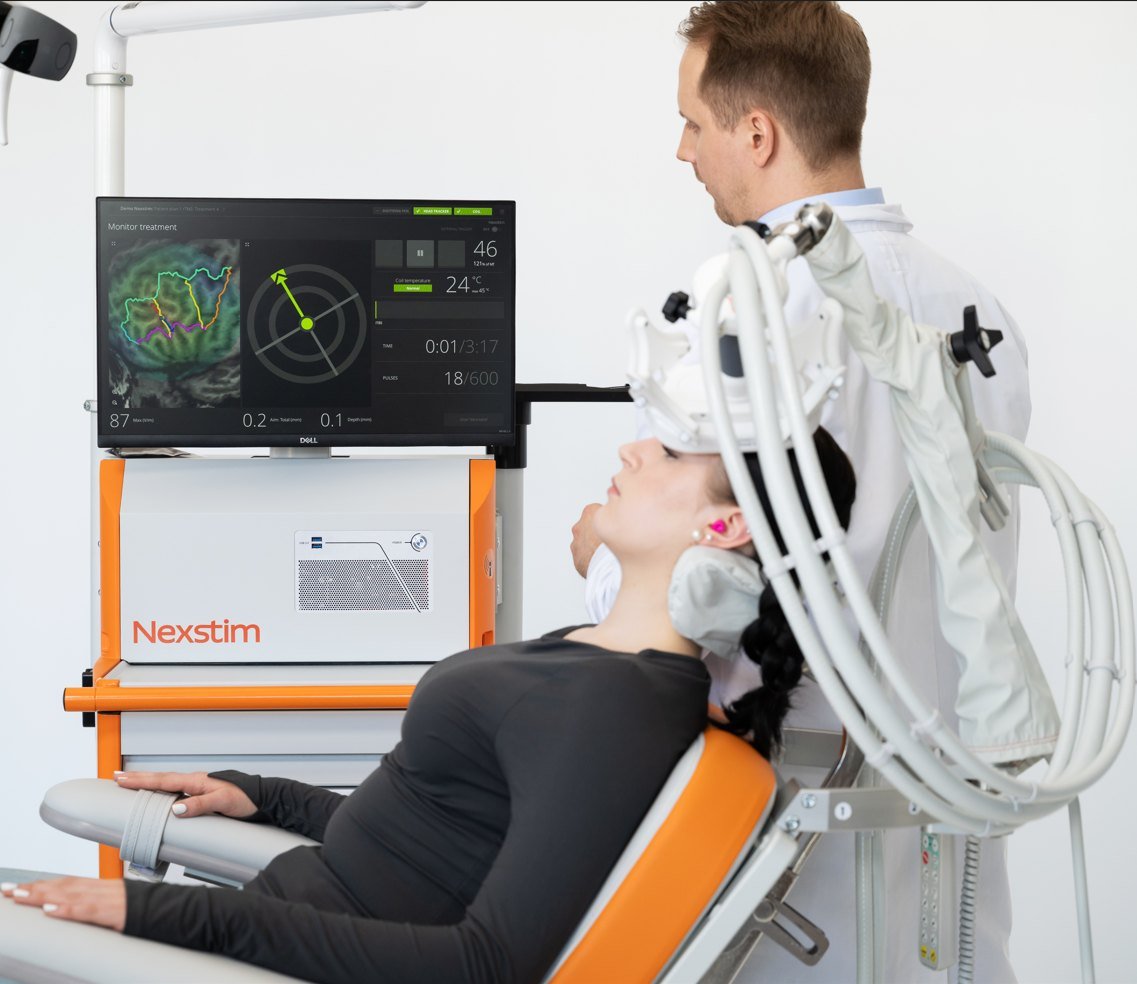
What a session looks like
- Under 30 minutes per session
- You sit comfortably, awake, in a chair
- No anesthesia, no downtime
- Drive yourself home; resume normal activity immediately
- All parameters set and monitored by Dr. Gee
nTMS vs. standard TMS
Targeting
Standard TMS positions the coil using scalp landmarks. nTMS uses your MRI and real-time tracking to aim at the intended brain region with millimeter-level accuracy.
Consistency
Navigation lets the same target be found again at every session, so treatment is delivered where it was planned — visit after visit.
Oversight
At Meridian Neuro, nTMS is a physician-directed medical treatment. Dr. Gee personally sets and monitors every stimulation parameter.
Conditions where nTMS may be considered
Following a comprehensive neurological evaluation, Dr. Gee may recommend nTMS as part of an individualized treatment plan for conditions including:
- Migraine and chronic headache
- Post-concussion syndrome
- Treatment-resistant depression (FDA-cleared indication; requires a co-managing psychiatrist on record)
- Parkinson's disease
- Stroke recovery
- Tinnitus
- Cognitive performance optimization
About FDA clearance. The Nexstim system's US FDA clearances include treatment of major depressive disorder. For other conditions listed here, nTMS may be considered by Dr. Gee as part of an individualized, physician-directed treatment plan based on his clinical judgment and the published research. Individual responses vary — which is exactly why every program is built around evaluation and checkpoints rather than promises.
Considering nTMS for depression? Meridian Neuro is a neurology practice, not a psychiatry practice. Treatment-resistant depression care requires a co-managing psychiatrist on record, and we coordinate closely with your psychiatrist throughout.
A built-in checkpoint, not an open-ended commitment.
1 · Evaluate
Every nTMS program begins with a comprehensive neurological evaluation with Dr. Gee (60–90 minutes) to determine whether nTMS is clinically appropriate for you.
2 · Initial treatment block
If nTMS is recommended, treatment starts with an initial block of sessions — Phase 1 — delivered under Dr. Gee's direction.
3 · Go / no-go checkpoint
At the end of Phase 1, you and Dr. Gee review your response together and decide — honestly — whether continuing makes sense.
If nTMS isn't the right fit, we'll say so, and discuss alternatives: Botox for chronic migraine, medication management, or referral to a provider better suited to your needs. That honesty is our whole model.
Many patients pursuing nTMS for post-concussion symptoms also benefit from vestibular physical therapy — dizziness and balance problems after concussion often respond to targeted vestibular rehabilitation, no neurology consult required to start.
nTMS, answered plainly
Does nTMS hurt?
Most people feel a tapping sensation on the scalp during stimulation. Some notice mild scalp discomfort early in treatment that typically lessens over sessions. There's no anesthesia because none is needed.
How long does a session take?
Under 30 minutes. You can drive yourself to and from your appointment and go straight back to work or your day.
How is this different from the TMS I've seen advertised?
Most TMS clinics position the treatment coil using external scalp measurements. Navigated TMS uses your own MRI and real-time tracking — like GPS for the brain — so stimulation is delivered to the planned target with millimeter-level precision, every session.
Do I need a referral?
No referral is required. Every nTMS program starts with a comprehensive neurological evaluation with Dr. Gee, which you can schedule directly. For treatment-resistant depression, a co-managing psychiatrist on record is required.
What does it cost?
Meridian Neuro is a cash-pay practice with flat fees, reviewed with you before treatment begins — no surprise fees. See Programs & Fees or call (949) 850-2885 for pricing.
Find out if nTMS is right for you.
Every nTMS program begins with a comprehensive neurological evaluation with Dr. Gee.